Understanding the Evidence
No single archaeological discovery establishes every event recorded in the New Testament. Historical reliability is instead built through cumulative evidence. Each confirmed person, location, political office, building, and local custom adds another independent point of agreement between the New Testament and the known world of the first century.
When these discoveries are considered together, they form a strong case that the Gospel writers and the author of Acts accurately understood the people, geography, government, architecture, and culture they described. This repeated agreement supports the conclusion that the New Testament is rooted in genuine history rather than later legend or invention.
The Pilate Stone
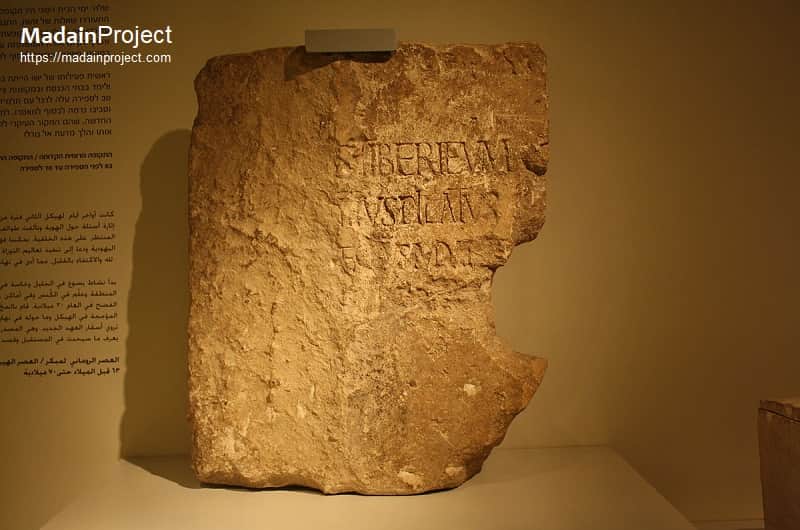
The Pilate Stone is a fragmentary Latin dedicatory inscription discovered in 1961 at Caesarea Maritima . The stone had been reused as part of a later staircase in the ancient theater.
The surviving text is incomplete. A commonly accepted reconstruction is:
[DIS AUGUSTI]S TIBERIEUM
[...PONTI]US PILATUS
[...PRAEF]ECTUS IUDA[EA]E
[...FECIT D]E[DICAVIT]
The inscription names Pontius Pilate and identifies him as prefect of Judea. It also refers to a Tiberieum, apparently a structure dedicated in honor of the emperor Tiberius.
Historical Significance
Pontius Pilate was also recorded by the ancient writers Philo, Josephus, and Tacitus. The stone is especially important because it is contemporary physical evidence from Pilate's own administrative center at Caesarea.
It confirms both Pilate's existence and his official title as prefect. This matches the political setting of the Gospels, which place Pilate in authority over Judea during the trial and crucifixion of Jesus.
What the Discovery Demonstrates
The Pilate Stone independently confirms the name, position, time period, and administrative setting of one of the central political figures in the Gospel accounts. It is direct archaeological corroboration of the Gospels' knowledge of Roman government in first-century Judea.
New Testament Passages
References
- Israel Museum. Pontius Pilate Inscription .
- Josephus, Jewish Antiquities, Book 18.
- Tacitus, Annals 15.44.
- Philo, Embassy to Gaius 299–305.
The Caiaphas Ossuary
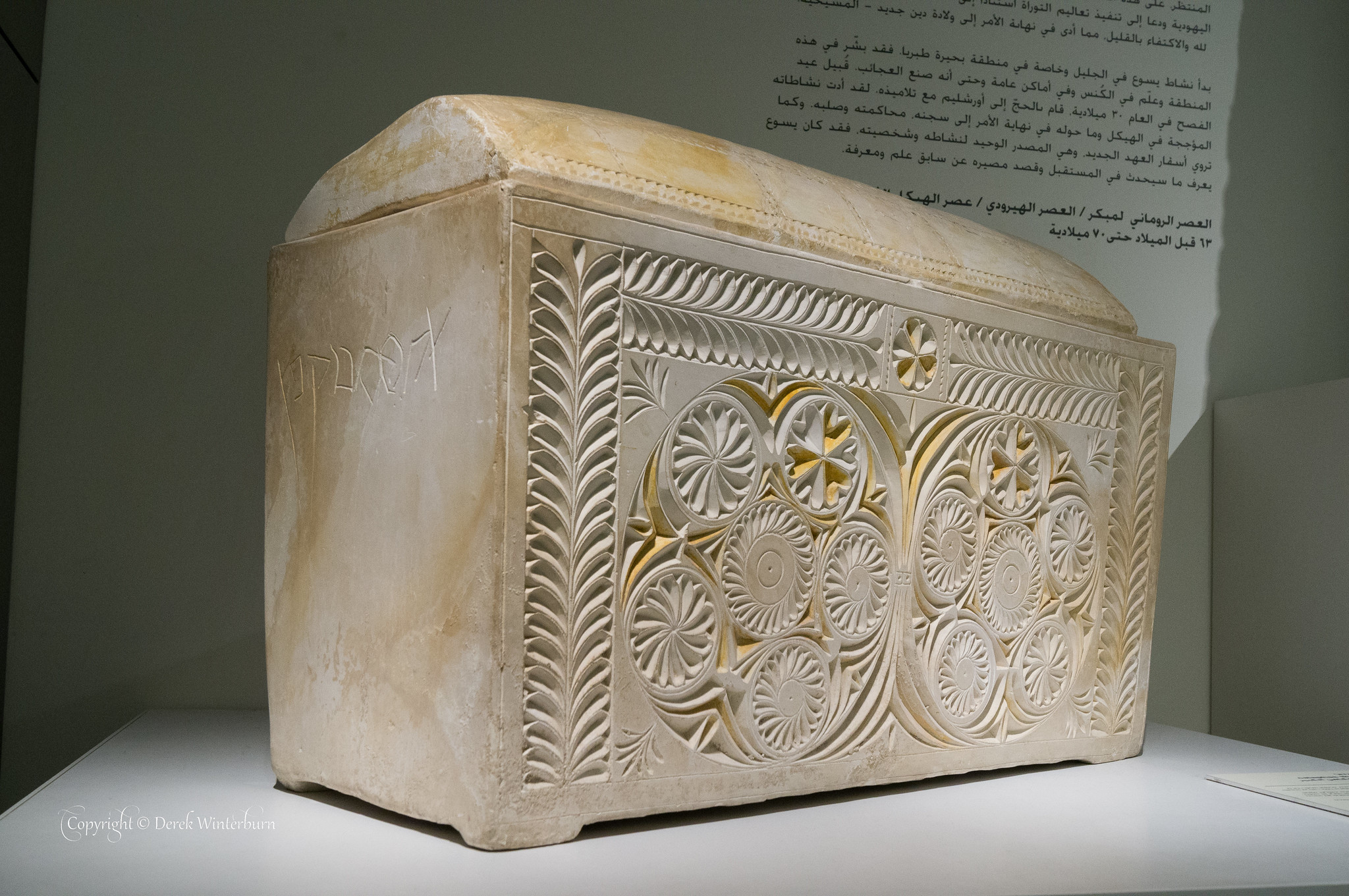
In 1990, archaeologists discovered a first-century burial cave south of Jerusalem containing several limestone ossuaries. Ossuaries were boxes used to hold the bones of the dead after the body had decomposed.
One unusually elaborate ossuary contained inscriptions generally translated as “Joseph son of Caiaphas.” The name corresponds with Joseph Caiaphas, whom the first-century historian Josephus identifies as the Jewish high priest during the governorship of Pontius Pilate.
Historical Significance
Caiaphas is independently known from both the New Testament and Josephus. The ossuary adds physical evidence for the Caiaphas name and for a wealthy priestly family living in first-century Jerusalem.
Because of the inscription, date, location, and elaborate decoration, the ossuary is widely associated with the high priest Joseph Caiaphas or his immediate family. Its discovery closely connects the archaeological record with the high-priestly family described in the Gospel accounts.
What the Discovery Demonstrates
The ossuary provides striking archaeological corroboration for the prominent Caiaphas family named in the Gospels. Together with Josephus' account, it strengthens the historical identification of Caiaphas as a real and influential figure in first-century Jerusalem.
New Testament Passages
References
- Israel Museum. Ossuary of Joseph Son of Caiaphas .
- Josephus, Jewish Antiquities 18.2.2 and 18.4.3.
- Zvi Greenhut, “Burial Cave of the Caiaphas Family,” Biblical Archaeology Review.
The Pool of Bethesda
In John 5, Jesus encounters a man who had been disabled for thirty-eight years near a pool called Bethesda, or Bethzatha in some ancient manuscripts. John describes the pool as being near the Sheep Gate and surrounded by five covered colonnades, also called porticoes.
Archaeological investigations beginning in the nineteenth century uncovered a large twin-pool complex near the Church of Saint Anne in Jerusalem . The complex consisted of two adjoining pools separated by a central wall.
Historical Significance
The arrangement of the complex provides a compelling explanation for John's unusual description of five colonnades. Four colonnades surrounded the outer edges of the pools, while a fifth ran along the central dividing wall.
This is a particularly significant match because John preserved a precise architectural detail that would be difficult to invent correctly after the site had been altered by later Roman, Byzantine, and Crusader construction.
What the Discovery Demonstrates
The Pool of Bethesda closely matches both the location and the distinctive five-colonnade design described in John. The discovery demonstrates the Gospel writer's accurate knowledge of Jerusalem's first-century geography and architecture.
View the Pool of Bethesda on a map
New Testament Passage
References
- Jerome Murphy-O'Connor, The Holy Land: An Oxford Archaeological Guide.
- Urban C. von Wahlde, Archaeology and John's Gospel.
The Pool of Siloam
In John 9, Jesus places mud on the eyes of a man who had been blind from birth and tells him to wash in the Pool of Siloam. The man washes in the pool and returns able to see.
Portions of the Siloam water system had been known for many years. In 2004, construction work involving a sewer line exposed monumental stone steps belonging to a much larger pool from the late Second Temple period. Archaeologists Ronny Reich and Eli Shukron then conducted a systematic excavation of the exposed remains.
Historical Significance
Coins, pottery, and construction evidence date the monumental pool from the first century BCE into the first century CE. The pool was therefore in use during the period in which the Gospel of John places Jesus' ministry.
The pool also served the large number of Jewish pilgrims traveling to the Jerusalem Temple , making it an important public landmark rather than an obscure location.
What the Discovery Demonstrates
The excavation confirms that a substantial first-century Pool of Siloam existed at the location identified by John. Its size, date, and location strongly support the Gospel's accurate knowledge of Jerusalem during the time of Jesus.
View the Pool of Siloam on a map
New Testament Passage
References
- Ronny Reich and Eli Shukron, excavation reports concerning the Second Temple-period Pool of Siloam.
- City of David. The Pool of Siloam .
First-Century Nazareth
Nazareth is not mentioned in surviving non-Christian literary sources from the early first century. This absence has led some critics to claim that the village did not exist during the lifetime of Jesus.
Archaeological excavations have uncovered domestic structures, pottery, storage pits, agricultural installations, and rock-cut tombs dating to the late Hellenistic and Early Roman periods.
Historical Significance
The evidence demonstrates that Nazareth was inhabited before and during the first century CE. The settlement appears to have been a small Jewish agricultural village rather than a large city.
Its small size helps explain why Nazareth received little attention from ancient historians and political writers. An ordinary rural settlement would not necessarily appear in the limited written records that survived.
What the Discoveries Demonstrate
The archaeological evidence directly answers the claim that first-century Nazareth was invented. It confirms that the village was inhabited during the exact period in which the Gospels place Jesus and his family there.
New Testament Passages
References
- Israel Antiquities Authority. Archaeological Excavations in Nazareth .
- Yardenna Alexandre, excavation reports concerning Early Roman-period Nazareth.
- Ken Dark, Roman-Period and Byzantine Nazareth and Its Hinterland.
The Gallio Inscription
Acts 18 describes the apostle Paul being brought before Gallio, the Roman proconsul of Achaia, while Paul was living in Corinth .
An inscription discovered at Delphi preserves part of a letter from the emperor Claudius. The inscription identifies Gallio as proconsul of Achaia. Because Claudius' titles in the inscription can be dated, historians generally place Gallio's service as proconsul around AD 51–52.
Historical Significance
The inscription independently confirms Gallio's office and provides one of the most important chronological reference points for dating Paul's time in Corinth and portions of his missionary activity.
What the Discovery Demonstrates
The Gallio Inscription confirms that Acts correctly names the Roman official, his title, his province, and the period in which he served. This precise match gives historians a firm date within the narrative of Acts and demonstrates the author's accurate knowledge of Roman provincial government.
New Testament Passage
References
- The Delphi, or Gallio, Inscription: Supplementum Epigraphicum Graecum 26.461.
The Thessalonian Politarch Inscription
In Acts 17, the officials of Thessalonica are called politarchs. This title was once considered unusual because it was not commonly found in surviving classical literature.
Inscriptions discovered in Macedonia , including an inscription from Thessalonica, show that politarch was an authentic local title for civic officials.
Historical Significance
The use of this precise regional title shows that the author of Acts was familiar with the civic terminology used in Macedonia. The title was not merely a generic term for rulers; it was the correct local designation for officials in Thessalonica.
What the Discovery Demonstrates
The inscription confirms that Acts uses the exact civic title employed in Thessalonica. This highly specific local detail strengthens the case that the author possessed accurate first-hand or well-sourced knowledge of the places and governments described.
New Testament Passage
References
- British Museum. Inscription From Thessalonica Naming Politarchs .
The Temple Warning Inscription
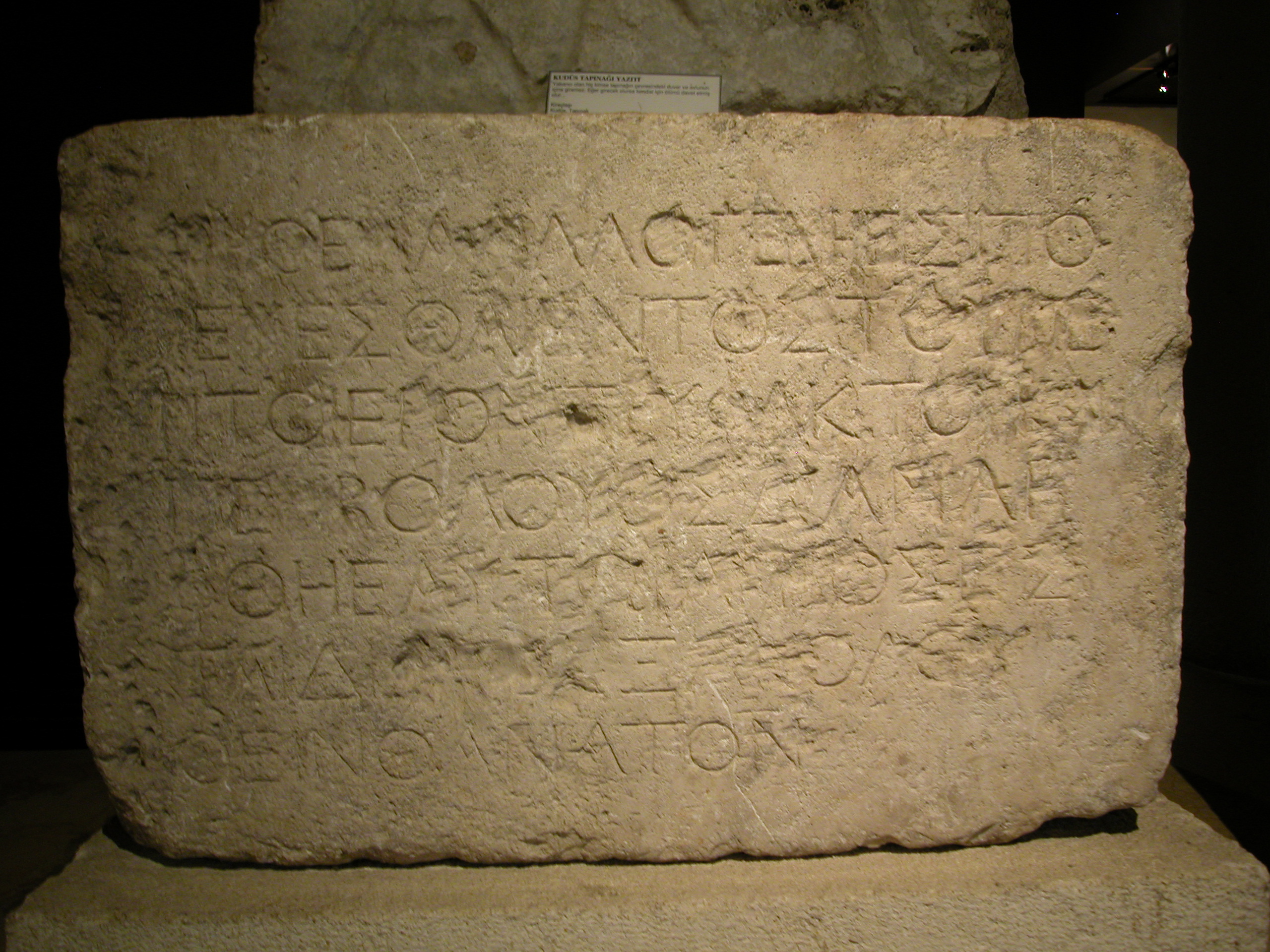
The Temple Warning Inscription is a Greek inscription discovered in 1871 near the Temple Mount in Jerusalem. It originally stood on the barrier that marked off the inner courts of the Jewish Temple from the outer area accessible to Gentiles.
The inscription warned that any foreigner who passed beyond the barrier would be responsible for his own death. This shows that strict access restrictions were in force at the Jerusalem Temple during the New Testament period.
Historical Significance
This discovery is especially important because it provides direct archaeological confirmation of the very kind of Temple regulation reflected in the Book of Acts. In Acts 21, Paul was accused of bringing a Gentile beyond the permitted area of the Temple, an act that would have been viewed as a serious violation.
The inscription demonstrates that the Temple courts were carefully regulated and that the warning described by the historical setting of Acts was not imaginary or exaggerated. It shows that the author of Acts accurately understood the religious and legal environment of first-century Jerusalem.
What the Discovery Demonstrates
The Temple Warning Inscription strongly supports the historical reliability of Acts by confirming that the Temple maintained a real barrier with written warnings restricting Gentile access. This gives important historical weight to the charge brought against Paul in Jerusalem.
New Testament Passage
References
- British Museum. Temple Warning Inscription .
- Acts 21:27–29.
Ancient Flood Accounts and the Book of Genesis
Archaeologists have discovered several ancient Mesopotamian accounts of a great flood. These include the Sumerian Flood Story, the Babylonian Epic of Atrahasis, and Tablet XI of the Epic of Gilgamesh.
The best-known artifact is the Gilgamesh Flood Tablet, discovered among the ruins of ancient Nineveh. It was part of the library of the Assyrian king Ashurbanipal and dates to the seventh century BC.
However, the flood story did not originate with the Epic of Gilgamesh. The British Museum explains that the flood account was originally an independent story that was later incorporated into the larger Gilgamesh epic. An older Babylonian version is preserved in the Epic of Atrahasis, including a tablet copied around 1635 BC.
Similarities to Genesis
The Mesopotamian accounts and Genesis share several important elements:
- A devastating flood is sent upon humanity.
- One man receives advance warning.
- He is instructed to construct a large boat.
- His family and animals are preserved inside the vessel.
- The boat eventually comes to rest after the flood.
- Birds are released to determine whether the waters have receded.
- A sacrifice is offered after leaving the vessel.
These similarities demonstrate that the memory of an extraordinary flood was deeply rooted in the ancient Near East. Genesis was not written in a cultural world where no one had ever heard of such an event.
Does This Prove Genesis Copied Gilgamesh?
The existence of similarities does not prove that the author of Genesis copied the Epic of Gilgamesh. No archaeological discovery identifies a Gilgamesh tablet as the source used by the author of Genesis, and the Gilgamesh epic itself incorporated an older flood tradition.
At most, the discoveries show that Genesis and the Mesopotamian accounts belong to a much older world of flood traditions. The accounts may draw upon a common ancient memory, preserve traditions that developed in different communities, or reflect later literary interaction. The tablets cannot by themselves determine which explanation is correct.
Major Differences
Although the basic outlines are similar, the meaning and presentation of the stories are substantially different.
- In Genesis, the flood is a moral judgment against human violence and corruption.
- In the Atrahasis account, humanity is destroyed largely because the growing human population and its noise disturb the gods.
- The Mesopotamian gods disagree, deceive one another, become frightened by the flood, and lose control of the disaster.
- In Genesis, one sovereign God announces the judgment, controls the waters, preserves Noah, and brings the flood to its intended conclusion.
- Noah is preserved because he is described as righteous, while the Mesopotamian survivor is saved through the secret intervention of one god against the decision of others.
- The vessel in the Gilgamesh account is described with dramatically different proportions from the long, stable ark described in Genesis.
Historical Significance
The Mesopotamian flood tablets do not disprove the Genesis account. Instead, they provide archaeological evidence that ancient civilizations preserved multiple traditions concerning a catastrophic flood and the survival of a family through a great vessel.
The widespread existence of flood traditions is consistent with the possibility that different peoples preserved memories of a genuine ancient disaster. Genesis presents that shared flood tradition within a distinctive historical and theological framework centered on divine judgment, mercy, covenant, and the preservation of life.
Biblical Passages
References
- British Museum. The Gilgamesh Flood Tablet .
- British Museum. The Atrahasis Flood Tablet .
- The Metropolitan Museum of Art. Cuneiform Tablet: Atrahasis, Babylonian Flood Account .
- University of Oxford, Electronic Text Corpus of Sumerian Literature. The Sumerian Flood Story .
Conclusion
Each discovery on this page confirms a particular person, title, location, building, date, or local expression recorded in the New Testament. One such match might be dismissed as coincidence. Repeated matches across different authors, regions, governments, and archaeological sites are far more significant.
Taken together, these independent discoveries form a powerful cumulative case for the historical reliability of the Gospels and Acts. The writers consistently placed their narratives within the real political, geographic, architectural, and cultural world of the first century. That level of repeated accuracy is evidence that the New Testament documents are rooted in genuine historical knowledge.